The complete study platform

Your entire semester, in one place.

Add your course material once. Tandral turns it into lessons, flashcards, practice, exams, podcasts, and a day-by-day plan, from the first lecture to the final.

Start studying free

Free plan included · No credit card required

Trusted by students at

Algonquin CollegeUniversity of OttawaCarleton UniversityUniversity of CalgaryUniversity of ManitobaHerzing CollegeLa CitéWillis College
4.6 on Trustpilot

How it works

From a folder of PDFs to exam-day ready.

01

Add your material

Upload your material and pick the pages you want to study.

02

Choose how to study

Those pages become a lesson, flashcards, a quiz, a podcast. Whatever you need today.

03

Follow the plan

A study plan, day by day, so you are ready on time.

Every format

Every way you study, in one place.

Every study tool is built from the material you upload.

Teaching

Lessons from your material, one chapter at a time, with a quiz after each.

Flashcards

From your material, or written by you. Color-coded, so the answer comes back to you.

Practice

One problem at a time, step by step, with feedback on each step.

Evaluation

Quizzes, or a full timed exam simulation. Feedback on every answer.

Mind map

Concept maps built from your material, or drawn by you.

Video

Your material as a narrated video, with captions.

Summary

All of it, or just the key ideas.

Audio

Study out loud, four ways, from a two-host podcast to teaching it back.

Essay

Outlines, wording help, and real sources, cited for you.

Chat

Ask your material anything.

Presentation

Real slides you can edit, then export to PowerPoint.

Study planner

A study plan that keeps you on time for exam day.

Learn it

Taught to you, chapter by chapter.

Tandral turns your pages into a lesson: clear chapters, taught one at a time, with a quick quiz after each.

  • See the plan first. The chapters show before the lesson starts.
  • Focus where it counts. Point it at one topic, or say what matters most.
  • A quiz after each chapter. A few questions, so you know it stuck.

lessons · read aloud · quiz after each chapter

Chapter 4 · The nervous system

~6 min read

Your nervous system moves information the way a campus moves students: along fixed routes, with priority lanes. Every signal travels through cells called neurons, passing from one to the next across a small gap called the synapse.
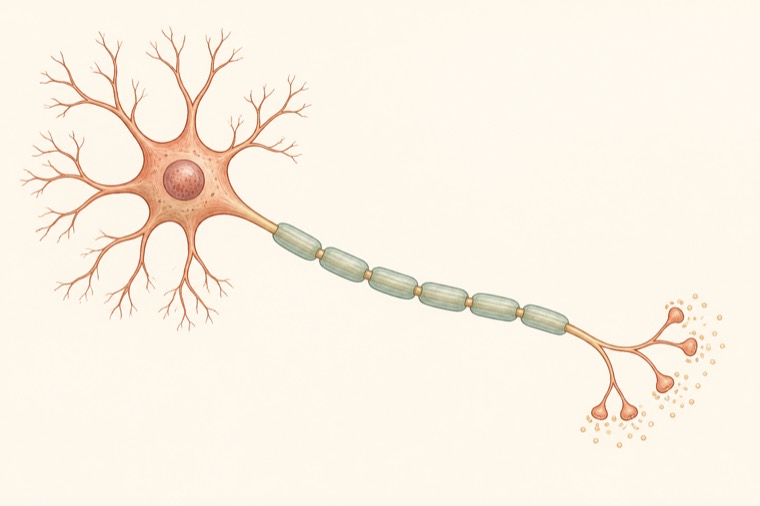
Figure 4.1 · One neuron, end to end

Axons wrapped in a myelin sheath carry signals up to thirty times faster than bare ones. Where that sheath is damaged, the signal slows or stops, which is what makes the diagram on page 84 worth knowing.

Your note

She said this comes up every year: name the gap, not just the cell.

Signals only cross the gap when enough of them arrive at once. Below that line nothing happens at all, which is why the response is called all or nothing.

Pop quiz

1. A damaged myelin sheath speeds the signal up.

2. Which of these speed a signal along an axon?

Work it out

One problem, one step at a time.

For the subjects you can't just memorize: math, chemistry, physics, code. You work the problem step by step, and Tandral checks each step as you go.

  • Answer your way. Type it, draw it, write the math, or code it.
  • Feedback on every step. You see where you went wrong, and why.
  • Stuck is allowed. Open an example, then keep going.

type · draw · math · code · checked at every step

A right triangle has legs of 3 cm and 4 cm. How long is the hypotenuse?

1. Which relationship connects the three sides?

Example

In a 5-12-13 triangle: 5² + 12² = 13²

Math

a² + b² = c²

Not quite. Square the legs first: 3² and 4², not 3 and 4.

a² + b² = c²

2. Put the two legs in.

Example

With legs 5 and 12: 5² + 12² = 13²

Math

3² + 4² = c²

Not quite. Square the legs first: 3² and 4², not 3 and 4.

3² + 4² = c²

3. Sketch it and mark the hypotenuse.

Example

The hypotenuse is the side opposite the right angle.

Draw
Not quite. Square the legs first: 3² and 4², not 3 and 4.

Test yourself

Quizzes and exam simulations, before the real one.

Quick quizzes, or a full timed exam simulation. Feedback on every answer, even the written ones.

true or false · multiple choice · short answer · long answer · timed exam simulation

Endocrine system · results
7/10
Q3 · True or false

Insulin raises the concentration of glucose in the blood.

You: True · Correct: False

Q6 · Short answer

Which hormone raises blood glucose between meals?

You: Insulin · Correct: Glucagon

Q9 · Multiple choice

Where in the pancreas is insulin made?

You: Alpha cells · Correct: Beta cells

The learning loop

What you missed becomes what you study next.

What you got wrong becomes your next lesson. Study it, then test yourself again.

video · lesson · flashcards · practice · then test yourself again

Built from the answers you missed3 of 10
Q3 · insulin and glucoseQ6 · which hormone raises itQ9 · where insulin is made
Teachingready · 6 min
Two hormones, one number0:00 / 4:12
Videoready · 4 min
QWhich hormone raises glucose between meals?
12 flashcardsready
Name both hormones2Say what each one does3Which one is missing here?
3 practice problemsready

Out loud

Study with your voice, not just your eyes.

Podcast

Two hosts walk through your chapter.

AlexWelcome back. Today we’re talking about patient rights, the responsibilities that come with them, and some important issues involving privacy and health information.
SamI know the phrase patient rights, but I sometimes think of rights as just a list of things patients are allowed to ask for. Is there more to it?
AlexYes. A right is a claim or privilege that a person is legally or morally entitled to. Legal rights are written into laws, such as the Canadian Charter of Rights and Freedoms and the Canada Health Act. Courts can enforce those rights.
SamAnd moral rights are different because they may not always be written in legislation?
AlexExactly. Moral rights are based on accepted social values and professional codes of ethics. For example, treating a patient with dignity is both an ethical expectation and, in some situations, a legal responsibility. A regulatory body, such as the College of Nurses of Ontario, may respond if a breach causes harm.
SamYou mentioned that rights come with obligations. What does that mean for nurses?
AlexIt means every right creates a corresponding responsibility. If patients have a right to privacy, nurses have a duty to protect their personal information. If patients have a right to understandable information, nurses have a responsibility to communicate clearly and support learning.
SamSo patient rights are not just ideas. They guide what health professionals must do.
AlexThat’s right. Major patient rights include respect and dignity, access to health information, confidentiality and privacy, safe care, discharge decisions, protection for vulnerable people, and informed consent.
SamLet’s start with respect and dignity. What does that look like in everyday nursing practice?
AlexIt means treating every person as worthy of respect, regardless of their illness, background, identity, or choices. A useful principle is: treat others as you would want to be treated. Nurses show respect through honesty, active listening, professionalism, confidentiality, and privacy.
SamDoes equal access fit under respect and dignity too?
AlexYes. Everyone should have equal access to health services and treatment. Respect also includes personal privacy. During an assessment, bath, examination, or procedure, the patient should be covered as much as possible and exposed only when necessary.
SamWhat about other people in the room, like students or visitors?
AlexUnauthorized people should not observe the patient’s care. And photographs must not be taken without permission, even if someone says the picture is for education. Educational purposes do not cancel the patient’s right to privacy.
SamThat seems like an important distinction. A clinical setting does not automatically mean everyone can see or record what happens.
AlexExactly. Privacy must be actively protected, not assumed.
SamWhat does access to health information involve?
AlexPatients have the right to access information in their health records and, when appropriate, request corrections or amendments. That can include their chart, test results, and bloodwork. Agencies and legislation guide the exact process.
SamSo patients may be able to view their information through an online portal, such as MyChart?
AlexYes. Many organizations provide secure online access. Nurses also have an educational role. They help patients and family members develop the knowledge and skills needed to care for themselves and to access the health-care system when help is needed.
SamI noticed an interesting question: does a patient have the right to receive a diagnosis from a nurse?
AlexPatients have a right to information about their health, but health professionals must communicate within their role and competence. A nurse should not interpret or disclose a diagnosis outside their scope or before the appropriate provider has explained it.
SamSo if a patient asks, ‘What did my scan show? Is my cancer back?’ the nurse should not guess or casually interpret the result.
AlexCorrect. The nurse can acknowledge the concern, explain what they can and cannot discuss, and connect the patient with the authorized health professional. For example: ‘I understand you’re worried. The provider will review the results with you, and I can help make sure you speak with them.’
SamThat protects the patient from receiving incomplete or inaccurate information.
AlexExactly. Access to information should be accurate, timely, understandable, and provided through the proper channels.
SamNow let’s connect this to confidentiality and privacy. Are those the same thing?
AlexThey are closely related, but not identical. Privacy is a person’s right to control access to themselves and their personal information. Confidentiality is the health professional’s duty to protect information learned while providing care.
SamWhat law governs this in Ontario?
AlexThe Personal Health Information Protection Act, commonly called PHIPA, enacted in 2004. It governs how personal health information is collected, stored, used, disclosed, retained, and disposed of in Ontario.
SamWhen we say the information belongs to the client but is housed by the facility, what does that mean?
AlexIt means the patient is the subject and owner of the personal health information, while the hospital or clinic stores and manages the record. The facility must protect the information and use it appropriately so care can be provided safely.
SamSo PHIPA balances two needs: protecting privacy and sharing enough information for safe care.
AlexPrecisely. For example, a nurse may need to share relevant information with members of the care team. But that does not mean the nurse can discuss the patient’s condition in a hallway, post about it online, or tell a curious friend.
SamAnd patients can control their consent regarding health information?
AlexYes. Clients generally have the right to give consent, refuse consent, or withdraw consent for the collection, use, or disclosure of their personal health information, subject to legal requirements and exceptions.
SamCan you give a simple example?
AlexA patient might agree that their information can be shared with the health-care team involved in treatment. They might refuse permission to share it with a particular person. They may also withdraw permission later. Nurses must follow the law, organizational policy, and professional standards when handling that request.
SamSo the key habit is to pause before sharing information and ask: who needs to know, why do they need it, and am I authorized to share it?
AlexThat is an excellent privacy check. Also remember that privacy includes physical space, conversations, records, electronic systems, and photographs.
SamLet me summarize. Patients have legal and moral rights, and health professionals have matching responsibilities. Patients deserve respect, dignity, privacy, safe care, access to their health information, and support in making informed decisions.
AlexWell said. Remember three especially important points: first, rights are connected to professional obligations. Second, patients should be treated with equal respect and protected from unnecessary exposure. Third, health information must be handled confidentially under laws such as PHIPA.
SamAnd when a patient asks about a diagnosis, the nurse should provide accurate information within their role, avoid guessing, and connect the patient with the appropriate provider.
AlexExactly. Understanding patient rights helps nurses provide care that is safe, ethical, respectful, and legally sound.
SamThat’s a helpful framework. Thanks for making the ideas practical.
AlexYou’re welcome. Keep asking who holds the right, what responsibility follows, and how your actions protect the patient.

Already playing. Turn the sound on to hear the hosts.

Ask me questions

It quizzes you on your own material.

TandralI read your chapter on patient rights and health information privacy. Let us see what stayed with you. First question: for a consent to be valid, what four things must be true of it?

Already talking. Turn the sound on to listen in.

Study together

Study together, on a video call.

Invite a friend, then study side by side and send each other what works.

Two students chat, start a video call, and send each other a flashcard deck, a quiz, a video lesson and a teaching session. Everything either one shares opens on both sides.

Watch it

Your material, as a video.

Made from a real course reading. Every word on screen, and you can jump to any part.
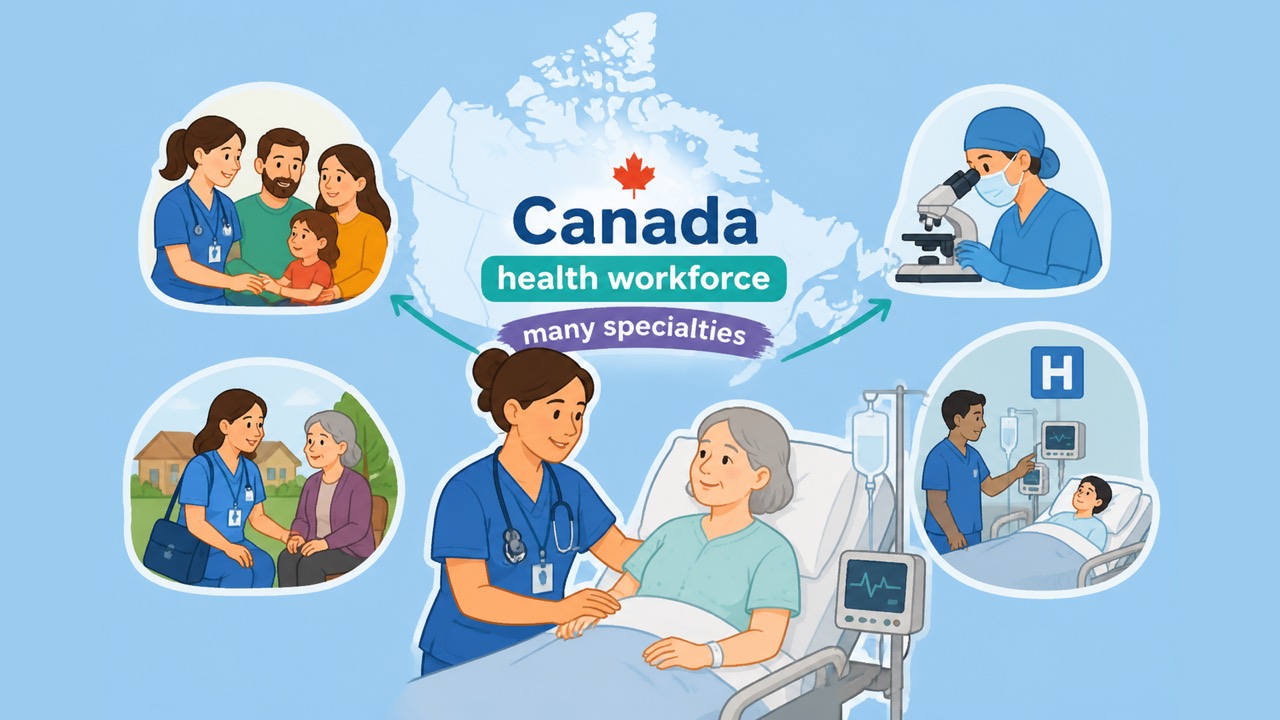
0:00 / 12:51

Already playing. Turn the sound on to hear it.

Remember it

Cards that come back until they stick.

Flashcards from your material, or ones you write yourself. Flip, answer, be honest. The ones you miss come back.

  • Only the topic you need. Up to 50 cards, on the topic you choose.
  • Color-coded key terms. Forget the answer, and the colors help you build it back.
  • Redo just the misses. Missed cards get their own pile.

up to 50 cards · or write your own

Question

What does the myelin sheath do?

Tap to flip
Answer

It insulates the axon, so the signal travels faster.

Tap to flip back

Write it

From blank page to bibliography.

Describe the assignment, then write it yourself with help that stays yours: an outline, a first line when you're stuck, real sources cited for you.

  • Sources you can check. Real papers, with a link to each. APA, MLA, Chicago and more.
  • Nothing missing. A checklist for each section, so you cover it all.
  • Hand it in properly. Export to Word when it's done.

10 outline types · 7 citation styles · export to Word

The Ethics of Gene Editing

1168 words

Germline editing raises questions that somatic therapies do not, because the changes are inherited by every generation that follows. The line between treating disease and selecting traits is easier to draw in principle than in policy1. Both sides of that line deserve the same scrutiny, and the policy is written by people who will not live with what it decides2

References
  1. 1.Doudna, Jennifer A. 2020. “The Promise and Challenge of Therapeutic Genome Editing.” Nature 578 (7794): 229-36.
  2. 2.Baylis, Françoise. 2019. Altered Inheritance: CRISPR and the Ethics of Human Genome Editing. Cambridge, MA: Harvard University Press.

Present it

From your pages to the projector.

A real deck in a real editor: up to twenty slides, fourteen themes, every element yours to move. When it is ready, export it to PowerPoint.

a real .pptx, opens in PowerPoint

one pick, and the whole deck follows

The Cardiovascular System

9 slides

Present

Where the blood sits, at rest

  • Veins
  • Arteries
  • Lungs
  • Heart
9 / 9
9 / 9
PPTXThe Cardiovascular System.pptx9 slides · opens in PowerPoint

Take it down

Write it by hand, on the page itself.
Beyond studying

Deadlines and to-dos, in the same place.

To-do & Calendar

Assignments that say "2 days left", and study sessions on a real calendar.

From real students

Take their word for it.

On camera

Français

real students, real phones.

"I used to use ChatGPT, but it just didn't work that well for me. Then I found Tandral, and it completely changed the game."
MOMaajidah OmerPractical Nursing · Algonquin College
"Honestly, it saved my life. It's a 10/10 for me, I have no complaints."
EEuniceKinesiology · University of Ottawa
"With Tandral, you feel less overwhelmed and more organized."
BBBrandon BukasaComputer Science · Université du Québec en Outaouais
"As a nursing student, I struggled with time management and studying. Tandral changed that."
MEMackenzie EastonPractical Nursing · Algonquin College

FAQ

Yours. You pick the pages, and everything is built from them.

It can get things wrong. So every graded answer shows its reasons, and your pages stay in view. If something looks off, check your pages.

No. You answer the steps, you take the tests, you write the essay. What you learn stays yours.

Yes. No credit card, and enough to take one chapter through a lesson, a deck, and a test.

Top up or change plans any time. Tokens you buy do not expire. Cancel any time.

It works from whatever material you bring it, in 18 languages. Phone, tablet, and computer all run it, and it installs as an app on any of them.

Bring your next exam under control.

Start studying free

Free plan included · No credit card required